
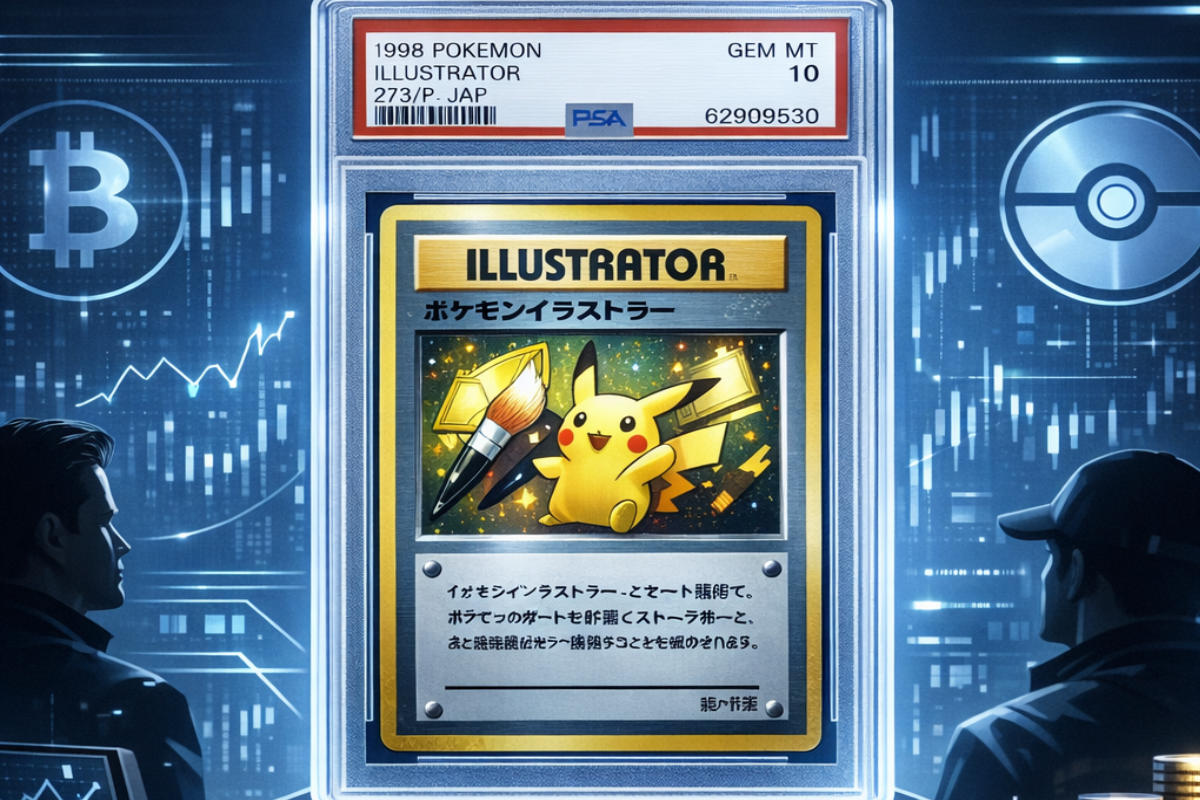
From $5.3M to $16.49M: Logan Paul's Pikachu Illustrator Sale Sets New Trading Card Benchmark
Logan Paul has completed the sale of his highly publicized Pokémon Illustrator card to A.J. Scaramucci for $16.49 million, establishing a new benchmark for trading card transactions and reigniting discussion around the intersection of high-value collectibles and digital asset platforms.
The purchaser, A.J. Scaramucci—son of SkyBridge Capital founder and former White House communications director Anthony Scaramucci—acquired the Pikachu Illustrator graded PSA 10, the sole specimen of its kind to achieve a perfect professional certification. The transaction surpasses the prior record of $13 million, set in August for a Michael Jordan–Kobe Bryant Dual Logoman 1/1 card.
"I'm on a planetary treasure hunt right now," Scaramucci remarked in comments reported by collectibles journalist Ben Burrows. "I'm on a quest to buy a T-Rex dinosaur fossil—that's on my list. I'm going to buy the Declaration of Independence. And I'm not stopping there. This was only the beginning."
Provenance and Market Significance
Originally issued in 1998, the Pokémon Illustrator card was distributed in a limited run of 39 copies. The PSA 10 designation indicates a specimen with four sharp corners, intact original gloss, and no visible imperfections—a condition rarely achieved for cards of this age. Paul initially acquired the card in July 2021 for $5.3 million. Shortly thereafter, he raised approximately $8 million to launch Liquid Marketplace, a platform designed to tokenize ownership stakes in physical and digital collectibles. During the summer of 2022, Paul listed the Illustrator card for fractional sale on the platform.
In 2024, the Ontario Securities Commission filed charges against Liquid Marketplace, Paul, and several associates, alleging violations of securities regulations including investor deception, failure to register appropriately, and alleged personal misuse of raised capital.
Paul's Statement on Fractional Ownership and Refunds
Addressing the sale and its connection to Liquid Marketplace, Paul provided a detailed account in a Monday post on social media platform X.
"I had originally offered to sell up to 51% of the Illustrator on Liquid Marketplace but ultimately only 5.4% of the card was sold for about $270k in the Summer of 2022 to fractional owners associated with LM," Paul stated. "In May 2024, I bought the card back for the same price it was sold for per the terms of LM and made funds available for users to withdraw."
Paul indicated that fractional owners were notified of withdrawal availability for approximately one year following the deposit of repurchase proceeds. He acknowledged that the Liquid Marketplace website subsequently experienced downtime due to circumstances he described as outside his control. Upon learning that users could no longer access withdrawal functions, Paul stated he personally funded restoration of the platform's operational status. Users are now able to withdraw remaining balances and have received email notifications regarding this capability.
Broader Collectibles Market Context
The sale occurs amid renewed activity in tokenized trading card markets. Collector Crypt, a Solana-based marketplace that issues redeemable NFTs representing graded Pokémon cards, reported nearly $37 million in trading volume during the first full week of January—the platform's highest weekly total to date. This surge suggests sustained investor interest in hybrid physical-digital collectibles, even as regulatory scrutiny around fractionalization models intensifies.
Implications for Collectibles and Digital Asset Convergence
The transaction underscores both the enduring appeal of ultra-rare physical collectibles and the complexities inherent in blending traditional ownership with blockchain-based fractionalization. While high-profile sales continue to capture attention, the regulatory challenges faced by platforms like Liquid Marketplace highlight the need for clearer frameworks governing tokenized securities, investor disclosures, and custodial responsibilities.
For collectors, the record-setting price reaffirms the status of condition-certified, historically significant cards as alternative assets capable of appreciating substantially over time. For policymakers, the episode illustrates the importance of aligning innovation in ownership structures with robust consumer protections.
Disclaimer: This report is for informational purposes only and does not constitute financial, legal, or investment advice. Collectibles and digital asset markets involve significant risk, including price volatility, regulatory uncertainty, and platform-specific operational risks. Prospective participants should conduct independent due diligence, review applicable terms of service, and consult qualified professionals before engaging with fractional ownership platforms or high-value collectible transactions.